Pokemon Card Condition Guide: Grading Standards & Tournament Rules
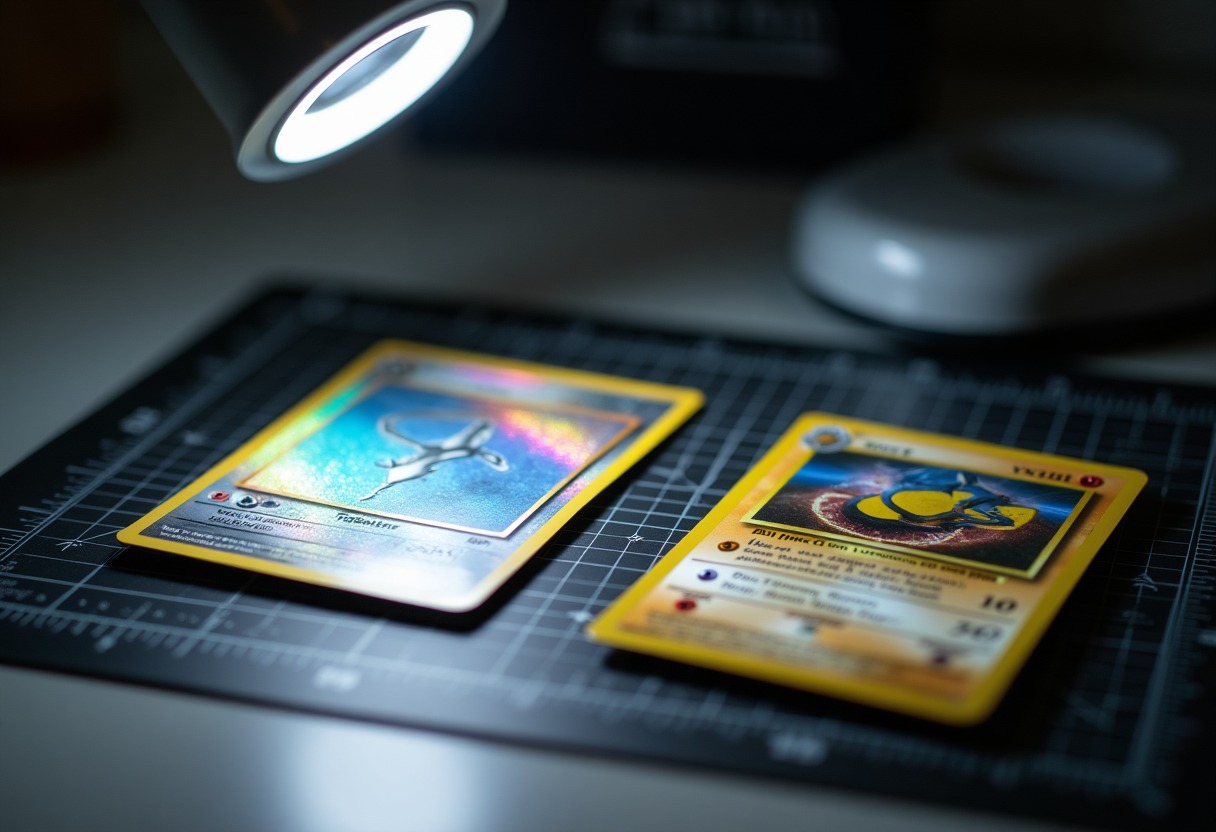
A single edge nick can drop a $200 card to $120. The difference between Near Mint and Lightly Played isn't subjective—it's measurable, documented, and directly impacts both tournament legality and resale value.
Why Card Condition Standards Matter Beyond Aesthetics
Card condition directly determines three critical factors: tournament playability, grading eligibility, and market value. The Pokémon TCG Tournament Rules specify that cards must have no damage severe enough to make them identifiable from the back in a sleeved deck. A card with corner damage visible through a sleeve becomes marked and illegal for sanctioned play, regardless of its front-face beauty.
Grading companies use consistent terminology, but their thresholds differ slightly. PSA grades on a 1-10 scale where 10 is Gem Mint, while BGS uses a 9.5 Pristine designation above their 10 scale. Understanding these distinctions matters when you're deciding whether to send cards for professional grading—a topic covered in depth in our Grading Pokemon Cards Psa Bgs Cgc guide. A card you think is Near Mint might grade PSA 8 due to centering, while another might hit PSA 10 despite minor print lines you initially worried about.
The financial spread is dramatic. A PSA 10 Base Set Charizard sells for $3,000-$5,000, while a PSA 7 version moves at $600-$900. That's a 75% value drop across three grade points. Raw card condition assessment becomes your first filter before investing in grading fees.
Near Mint: The Gold Standard Definition
Near Mint (NM) represents cards that appear pack-fresh under normal viewing conditions. Closer inspection with a → Shop jewelers loupe 10x magnification on Amazon may reveal minor imperfections, but they're minimal.
Near Mint characteristics:
- Corners: Sharp and intact on all four points, though a microscopic touch of wear (visible only under magnification) is acceptable
- Edges: Clean with no visible whitening, though factory cut lines may be present
- Surface: No scratches, creases, or print defects. Minor print lines are acceptable if factory-original
- Centering: Should be 60/40 or better on both front and back, though this varies between sets due to production quality
- Back: No edge wear, scratches, or discoloration
The critical distinction: Near Mint cards have imperfections you need to look for, not ones immediately visible. When sleeved and inserted into one of the options in our Best Pokemon Card Binders 2026 guide, they appear flawless at arm's length.
Factory defects complicate matters. Print lines, off-center cutting, and roller marks occur during production. These don't automatically drop a card below Near Mint—they're original to the card. However, they do impact PSA/BGS grading scores, where centering and surface quality contribute to the final grade.
Use a → Shop UV flashlight blacklight on Amazon to check for surface scratches invisible under normal light. Holographic cards, especially older ones, show micro-scratching under UV that drops them from NM to LP.
Lightly Played: Where Value Starts Dropping
Lightly Played (LP) cards show minor wear from handling or gameplay. They remain tournament-legal when double-sleeved (a requirement covered in our Pokemon Tcg Tournament Preparation guide), but their market value drops 20-40% below Near Mint equivalents.
Lightly Played indicators:
- Corners: Slight whitening visible on one or two corners without magnification
- Edges: Minor whitening along the edges, typically less than 3mm in width
- Surface: Light scratching on holo sections, or 1-2 very minor surface impressions that don't break the card stock
- Back: Light edge wear or minor scuffing, but no creases
- Overall: The card has obviously been handled, but with care
The LP designation covers a wide range. A card with one slightly worn corner sits at the high end of LP, while a card with edge whitening on three sides and light surface scratching falls at the low end. When buying LP cards online, always request specific photos of corners and edges.
For tournament play, LP cards work perfectly fine when protected with quality sleeves. Check our Best Pokemon Sleeves recommendations for options that conceal minor edge wear. The tournament legality line exists at Moderately Played—once corner damage creates visible thickness differences or edge whitening shows through a sleeve, you're risking marked card penalties.
Complete Condition Scale Comparison
| Condition | Corner Wear | Edge Whitening | Surface Issues | Value vs NM | |-----------|-------------|----------------|----------------|-------------| | Near Mint (NM) | None visible to naked eye | None visible | Factory-only marks | 100% | | Lightly Played (LP) | 1-2 corners show minor white | Minor whitening <3mm | Light scratching on holo | 60-80% | | Moderately Played (MP) | All corners show wear | Visible whitening >3mm | Multiple scratches, minor crease | 30-50% | | Heavily Played (HP) | Rounded corners | Significant whitening | Deep scratches, creases visible | 15-30% | | Damaged (DMG) | Bent or torn corners | Edge damage/tears | Major creases, water damage | 5-15% |
This table reflects market pricing observed across TCGPlayer, eBay, and major card shops. Individual card values vary based on playability and collectibility. A tournament staple in Heavily Played condition retains more value than a collectible-only card in the same condition.
Moderately Played is where tournament legality becomes questionable. A head judge may allow MP cards if they're properly double-sleeved and show no thickness variation, but you're risking a game loss if an opponent calls attention to them. For high-stakes events, stick with LP or better.
Tournament Legality: The Official Standards
The Pokémon Organized Play Tournament Rules state that cards must be "in a condition that makes them indistinguishable from each other when sleeved." This creates a practical test: shuffle your deck face-down while sleeved. If you can identify specific cards by back damage, corner wear, or thickness differences, those cards are illegal.
Tournament-legal condition requirements:
- No corner damage creating detectable thickness variation
- No bends or creases visible through sleeves
- No back damage severe enough to show through sleeve material
- Cards must be structurally sound (no splitting layers, no water damage)
Double-sleeving provides some protection. An inner perfect-fit sleeve plus an outer standard sleeve can conceal minor edge whitening and light corner wear. However, major creases, bends, or rounded corners remain visible regardless of sleeving quality.
For proxy testing before purchasing expensive singles, refer to our Pokemon Tcg Proxy Testing Guide. Testing with condition-accurate proxies helps you understand which cards need to be Near Mint versus which can be Lightly Played without impacting tournament performance.
If you're building competitive decks on budget, focus spending on chase cards that see heavy play and buy LP copies of tech cards you'll rotate out. Our Budget Deck Guide explains this allocation strategy in depth.
Essential Tools for Condition Assessment
Professional graders use consistent lighting, magnification, and measurement tools. You can replicate this setup affordably:
Core assessment kit:
- 10x jeweler's loupe: → Shop magnifying glass loupe jewelry on Amazon for corner and edge inspection
- UV flashlight: → Shop UV flashlight blacklight on Amazon reveals surface scratches on holos
- White cotton gloves: → Shop white cotton gloves archival on Amazon prevent fingerprints during examination
- Bright LED light source: Daylight-spectrum (5000K-6500K) eliminates color temperature bias
- Flat white surface: Neutral background for photography and comparison
Store cards in proper protection immediately after assessment. Our Best Card Protectors Organizers guide covers storage solutions that prevent condition degradation.
When photographing cards for sale or grading submission, use consistent lighting at a 45-degree angle to highlight surface texture without creating glare. Photograph all four corners individually, both edges, and the full front/back. This documentation protects you as both buyer and seller.
For high-value cards, consider purchasing a → Shop card condition reference guide on Amazon that shows physical examples of each condition grade. These guides provide tactile standards beyond written descriptions.
Advanced Condition Considerations Most Guides Skip
Set-specific condition quirks: Early Wizards of the Coast sets (Base through Neo series) came with inherently worse centering and more print defects than modern sets. A PSA 9 from Base Set often has centering that would grade PSA 8 in a modern set. Adjust your Near Mint standards by era—1999 Base Set cards meeting strict NM criteria are exceptionally rare.
Holo scratching patterns reveal handling: Vertical scratches suggest storage in a binder without sleeves, where cards rubbed against page material. Circular micro-scratches indicate cleaning attempts with cloth material. Uniform surface scratches across multiple cards in a collection suggest poor storage conditions. This context helps when buying collections—you can predict condition across unseen cards based on patterns in the sample.
Humidity damage shows subtly: Cards exposed to high humidity develop slight waviness in the card stock, visible when placed on a flat surface. They also show surface dulling on holo patterns. This damage is often missed in online photos but immediately apparent in hand. If buying high-value cards, request a video showing the card from multiple angles and laying flat on a surface.
Factory edge wear vs handling: Pre-2003 Pokémon cards frequently show minor edge whitening straight from packs due to cutting processes. This factory wear is acceptable in NM designation, but you need experience to distinguish it from handling wear. Factory edge wear appears uniform across the edge, while handling wear concentrates at corners and high-touch points.
Grading company bias: PSA historically grades vintage Pokémon cards more leniently than modern cards. BGS applies stricter surface and corner standards but weights centering less heavily. CGC falls between them. If sending cards for grading, research which company's standards favor your specific card's characteristics.
For investment purposes, pristine condition matters more than playability. Cards destined for long-term holds should be Near Mint or better, stored in top-loaders, and kept in climate-controlled environments. Our Japanese Pokemon Cards Investment guide explores how condition impacts appreciation rates on high-end collectibles.
FAQ
What's the difference between Near Mint and Mint condition? Mint indicates a completely flawless card with perfect centering, no print defects, and sharp corners under magnification. Near Mint allows minor print lines and slight centering issues (60/40) that don't impact appearance at normal viewing distance. The distinction matters primarily for PSA 10 vs PSA 9 grading—both are considered Near Mint in raw card trading.
Can Lightly Played cards be used in official Pokemon tournaments? Yes, LP cards are tournament-legal if they're double-sleeved and show no damage visible through the sleeves that could mark them. Edge whitening and light corner wear are acceptable as long as they don't create identifiable thickness differences. Always check with the head judge before the event if you're uncertain about specific cards.
How much does condition affect card value for playable staples vs collectibles? Playable staples retain 60-70% of Near Mint value in Lightly Played condition because functionality matters more than aesthetics. Collectible cards drop to 40-50% of NM value in LP condition since display quality drives demand. Cards like Most Valuable Charizard Cards All Time see steeper condition penalties than competitive deck staples.
What causes the white edges on Pokemon cards and can it be prevented? Edge whitening occurs when the colored paper layer separates slightly from the card's white core due to handling pressure or humidity changes. Prevention requires immediate sleeving after opening packs, using inner sleeves, and storing in low-humidity environments (40-50% relative humidity). Once whitening appears, it's permanent—no cleaning or treatment removes it.
Is a card with a factory print defect still considered Near Mint? Yes, factory defects including print lines, off-center cutting, and minor foil imperfections don't drop a card below Near Mint designation as they're original to production. However, these defects do impact PSA/BGS grading scores. A card can be Near Mint in trading condition but only grade PSA 8 due to poor centering or surface anomalies present since printing.
Mastering Condition Assessment
Understanding condition standards transforms you from a buyer who hopes for quality to one who evaluates it systematically—the same approach that separates casual pack openers from serious investors building portfolios that appreciate rather than depreciate.
Some links on this page are affiliate links. We may earn a small commission if you purchase through them, at no extra cost to you.
As an Amazon Associate we earn from qualifying purchases. This article contains affiliate links; if you buy through them we may earn a small commission at no additional cost to you.
Keep leveling up
More From the Squad
Set reviews, pull-rate data, and the gear the community trusts.