Japanese vs English Pokémon Cards: Investment Value Analysis
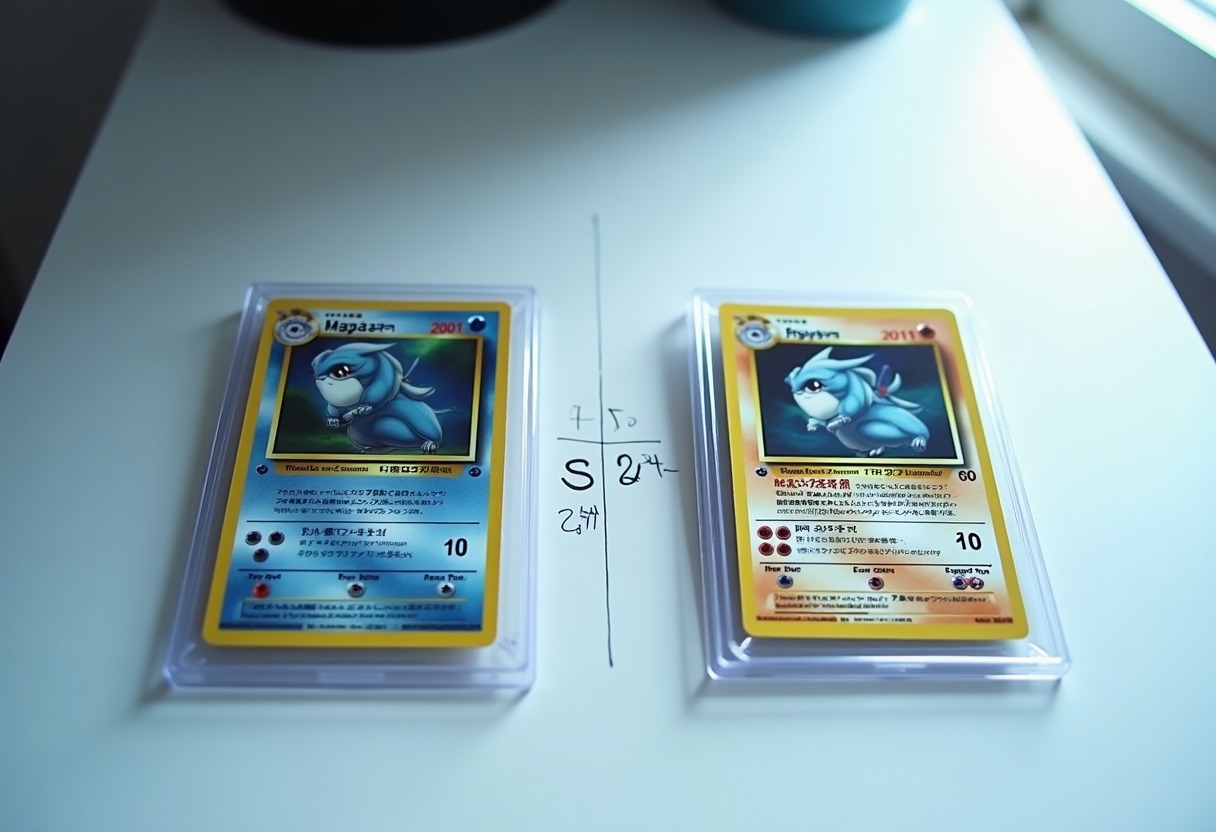
Japanese Pokémon cards consistently command higher prices than their English counterparts, often trading at 20-50% premiums for equivalent cards. The fundamental question for serious collectors isn't whether Japanese cards cost more—it's whether that premium translates to superior long-term investment performance.
Market Dynamics Drive the Japanese Premium
Japanese cards operate under fundamentally different supply constraints than English releases. Print runs for Japanese sets typically run 60-70% smaller than English equivalents, creating immediate scarcity that compounds over time. This isn't marketing hype—Pokémon Company International distributes Japanese sets exclusively through domestic retailers first, with international availability limited to specialty importers and online platforms.
The artwork advantage runs deeper than aesthetic preference. Japanese cards frequently feature exclusive artwork, foiling patterns, and texture variations that never appear in English releases. The recent Japanese-exclusive "Art Rare" cards in sets like Paradigm Trigger showcase artwork quality that collectors specifically target for investment purposes.
Cultural significance adds another premium layer. Japanese cards carry the weight of being "first edition" globally—every Japanese release predates its English translation by 3-4 months, making them the original version by default.
Investment Performance: The Numbers Tell the Story
Card condition and grading create the most significant value gaps between Japanese and English cards. PSA 10 Japanese Base Set Charizards currently trade 40-60% higher than English PSA 10s, but this gap narrows dramatically at PSA 9 grades where English cards often match Japanese pricing.
Tournament legality heavily favors English cards for active players. Standard and Expanded formats require English cards for official play, meaning Japanese cards serve purely as collection pieces rather than functional investments that retain play value.
Market Comparison: Japanese vs English Cards
| Factor | Japanese Cards | English Cards | Investment Impact | |--------|---------------|---------------|-------------------| | Print Run Size | 60-70% smaller | Larger distribution | Japanese scarcity premium | | Artwork Exclusives | Frequent unique variants | Standard international art | Japanese collectibility edge | | Tournament Legal | No (official play) | Yes (all formats) | English utility value | | Grading Premiums | Higher at PSA 10 | Competitive at PSA 9-8 | Japanese condition sensitivity |
Liquidity presents the biggest challenge for Japanese card investors. English cards sell faster and to broader audiences, while Japanese cards target specific collector demographics. This creates higher transaction costs and longer hold times for Japanese positions.
Strategic Product Recommendations for International Investing
Japanese booster boxes offer the purest exposure to scarcity-driven appreciation. Focus on sets with exclusive artwork or mechanically unique cards that won't receive English translations. → Shop Japanese Pokemon booster boxes on Amazon for current market options, though specialty importers often provide better pricing and authenticity guarantees.
Price tracking becomes essential for international positions. → Shop Pokemon card price guides on Amazon that include Japanese market data help identify arbitrage opportunities between domestic and international pricing.
Storage requirements differ significantly for Japanese cards. The paper quality and printing processes make Japanese cards more susceptible to humidity damage than English cards. → Shop Japanese trading card sleeves on Amazon designed for Japanese card dimensions provide better protection than standard Western sleeves.
Currency hedging affects all Japanese positions. Yen volatility can erase gains from card appreciation, making → Shop currency conversion calculator on Amazon tools essential for tracking real returns in your base currency.
Authentication becomes critical with Japanese imports. The higher premiums attract counterfeiters targeting Western collectors unfamiliar with Japanese printing characteristics. → Shop Pokemon card authentication tools on Amazon that can detect Japanese-specific printing markers before major purchases.
Advanced Collecting Strategies Most Investors Miss
Set timing creates arbitrage opportunities between Japanese and English releases. Japanese cards often spike in price during the 3-4 month window before English translation, then correct downward once English supply hits the market. Savvy investors buy Japanese cards immediately after English announcement but before English release to capture this timing premium.
Regional exclusive promotions offer the highest upside potential. Japanese Pokémon Centers, convenience store collaborations, and tournament prizes create cards with zero English equivalents. These represent pure scarcity plays without competition from English versions.
Condition arbitrage works particularly well with Japanese vintage cards. Western collectors often undervalue Japanese cards in PSA 8-9 condition while overpaying for PSA 10s. The price gap between PSA 9 and PSA 10 Japanese cards frequently exceeds the gap for English equivalents, creating opportunities to buy PSA 9 Japanese cards at relative discounts.
Population reports reveal grading biases that create value opportunities. PSA and BGS grade fewer Japanese cards overall, making high-grade Japanese cards statistically rarer than their English counterparts even when raw card populations are similar.
The most successful Japanese card investors focus on sets with mechanical differences rather than pure translation differences. Cards with unique abilities, different energy costs, or exclusive Pokémon that never received English printings maintain their premiums indefinitely rather than facing English competition.
For proper storage and organization of your Japanese collection, check out our Best Pokemon Card Sleeves Storage Collectors guide, which covers protection methods for international cards. If you're starting with Japanese singles rather than sealed products, our Where To Buy Singles guide includes reputable Japanese card retailers.
FAQ
Are Japanese Pokemon cards worth more than English cards?
Japanese Pokémon cards typically trade at 20-50% premiums over English equivalents due to smaller print runs and exclusive artwork variants. However, this premium varies significantly by set, card condition, and market demand. Vintage Japanese cards show the most consistent premiums, while modern cards may only command premiums for exclusive artwork versions. The premium also depends heavily on card condition—PSA 10 Japanese cards command the highest premiums, while PSA 8-9 Japanese cards often trade closer to English pricing.
Can you use Japanese Pokemon cards in tournaments?
Japanese Pokémon cards are not legal for official tournament play in English-speaking regions. All sanctioned tournaments including Standard, Expanded, and Limited formats require English cards for gameplay. This restriction significantly impacts the investment value of Japanese cards since they cannot serve dual purposes as both collectibles and tournament-legal assets. Players who want to compete must maintain separate English collections, making Japanese cards purely collectible investments rather than functional game pieces.
How do you authenticate Japanese Pokemon cards?
Authentic Japanese Pokémon cards feature specific printing characteristics including sharper text definition, different card stock texture, and unique foiling patterns compared to English cards. The most reliable authentication method involves comparing suspect cards to verified authentic examples under magnification. Japanese cards also use different font weights and spacing for text elements. Professional authentication services like PSA and BGS can verify Japanese cards, but their databases contain fewer Japanese examples than English cards, making authentication more challenging for obscure sets.
What makes Japanese Pokemon cards more expensive?
Smaller print runs drive the primary premium for Japanese cards, typically 60-70% smaller than English distributions. Exclusive artwork variants that never receive English translations add significant collector value. Cultural significance as the "original" versions of cards appeals to collectors who prefer source material. Import costs and currency exchange rates add additional premiums for international buyers. The combination of natural scarcity, exclusive content, and import logistics creates sustained price premiums that often persist across multiple market cycles.
Should I invest in Japanese or English Pokemon cards?
English cards offer superior liquidity, tournament utility, and broader market appeal for most investors. Japanese cards provide scarcity premiums and exclusive content but require specialized knowledge and longer hold times. New investors should start with English cards to understand market dynamics before adding Japanese positions. Experienced collectors can use Japanese cards for diversification and scarcity plays, particularly targeting sets with exclusive artwork or promotional releases. The optimal strategy often involves a portfolio weighted toward English cards with selective Japanese positions in high-confidence scarcity plays.
Japanese Pokémon cards represent a specialized investment class that rewards knowledge, patience, and cultural appreciation over quick profits.
Some links on this page are affiliate links. We may earn a small commission if you purchase through them, at no extra cost to you.
As an Amazon Associate we earn from qualifying purchases. This article contains affiliate links; if you buy through them we may earn a small commission at no additional cost to you.
Keep leveling up
More From the Squad
Set reviews, pull-rate data, and the gear the community trusts.